Ladder Load Ratings and Safety Standards in Australia: A Complete Workplace Guide
April 1, 2026
Choosing the right ladder isn’t just about convenience — it’s about workplace safety, compliance, and preventing serious injuries.
Every year in Australia, workers are injured because the wrong ladder is used, equipment is damaged, or load limits are exceeded. Understanding ladder load ratings, safety standards, and proper ladder selection is essential for anyone working at heights.
In this guide, we explain:
- What ladder load ratings mean
- Australian ladder safety standards
- How to choose the right ladder for the job
- Why ladder inspections are critical for compliance
- How a professional ladder inspection program can keep your workplace audit-ready
What Is a Ladder Load Rating?
A ladder load rating is the maximum safe working load the ladder can support.
This total weight includes:
- The person using the ladder
- Clothing and personal protective equipment (PPE)
- Tools and equipment being carried
According to Bailey Ladders, exceeding a ladder’s load rating creates a serious safety risk and may void product warranties.
For workplace use in Australia, ladders must meet minimum load rating requirements and comply with recognised safety standards.
Common Ladder Load Ratings in Australia
Most ladders sold in Australia fall into the following load rating categories.
| Load Rating | Typical Use | Workplace Suitability |
| 100 kg | Domestic home use | Not permitted in workplaces |
| 120 kg | Minimum industrial requirement | Entry-level workplace use |
| 150 kg | Industrial heavy-duty | Trades and regular site work |
| 180 kg | Professional heavy-duty | Frequent commercial use with tools |
Regulators such as SafeWork NSW advise that workplace ladders must:
- Be industrial-rated
- Have a minimum 120 kg load rating
- Comply with Australian ladder standards
Australian Ladder Safety Standards (AS/NZS 1892)
The primary ladder safety standard in Australia is:
AS/NZS 1892 Portable Ladders Standard
This standard specifies requirements for:
- Ladder design and construction
- Materials and structural strength
- Load rating classifications
- Testing procedures
- Safety labelling and markings
- Safe use and maintenance
Compliance with this standard ensures a ladder is structurally sound, stable, and suitable for Australian workplace environments.
For employers, using compliant equipment is an important part of meeting workplace safety obligations.
Industrial vs Domestic Ladders
Another key safety distinction is the duty rating assigned by manufacturers.
Domestic Duty Ladders
Domestic ladders are designed for light household tasks such as:
- Changing light bulbs
- Cleaning gutters
- Basic DIY projects
They typically have lower load capacities and lighter construction, which makes them unsuitable for workplace use.
Industrial Duty Ladders
Industrial ladders are designed for professional and trade environments.
These ladders are:
- Tested to meet AS/NZS 1892 requirements
- Built with stronger materials
- Designed for regular and demanding use
Most workplaces require industrial-rated ladders as a minimum safety standard.
Why Ladder Load Ratings Matter
Falls from ladders remain a major source of workplace injury in Australia.
Safety data indicates:
- 4–5 Australians die each year from ladder falls
- Nearly 1 in 10 ladder falls result in brain injury
Common causes of ladder incidents include:
- Using ladders with insufficient load ratings
- Damaged or poorly maintained ladders
- Incorrect ladder setup
- Using domestic ladders on work sites
Authorities such as Safe Work Australia recommend that ladders be used only when safer access equipment is not reasonably practicable and primarily for short-duration tasks.
How to Choose the Right Ladder for the Job
Selecting the correct ladder improves both safety and productivity.
Here are key factors to consider.
- Task Requirements
Different jobs require different ladder types.
Examples include:
- Electrical work → Non-conductive fibreglass ladders
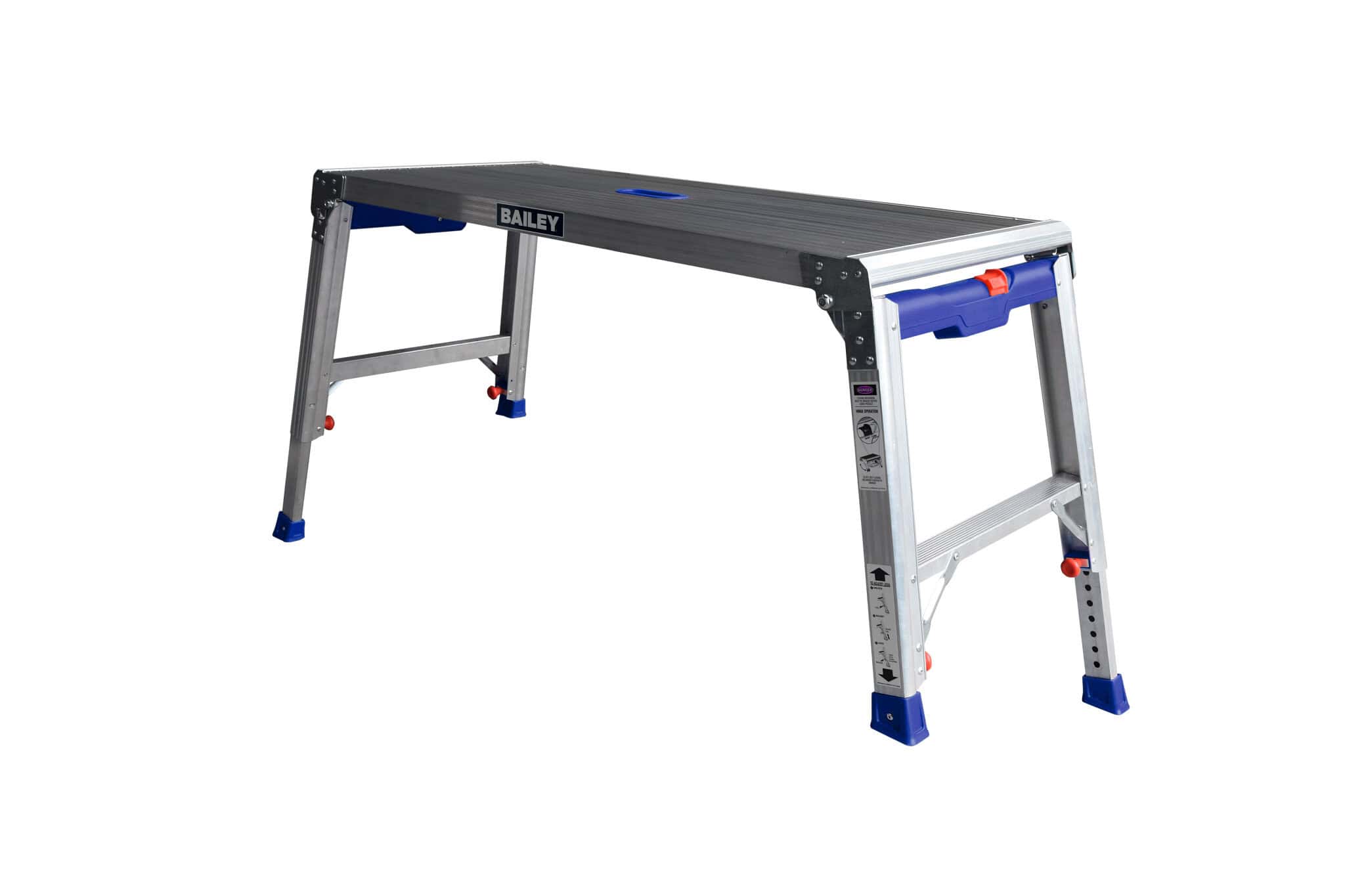
- Repetitive work tasks → Platform ladders
- Access to roofs or structures → Extension ladders
- Tight spaces → Compact A-frame ladders
Choosing the correct ladder design helps reduce fatigue and improve stability.
- Duration of Work
Ladders should generally be used for short-duration access tasks.
For longer tasks, safer alternatives may include:
- Mobile scaffolding
- Elevated work platforms
- Work platforms
Guidance from Safe Work Australia emphasises selecting the safest reasonably practicable access method.
3. Load Capacity
Always ensure the combined weight of the user, tools, and equipment stays below the ladder’s load rating.
Exceeding the working load limit significantly increases the risk of ladder failure.
- Work Environment
Before using a ladder, assess the surrounding environment for hazards such as:
- Uneven ground
- Install Level Eze Leg Levelling System
- Slippery surfaces
- Doorways and pedestrian traffic
- Strong wind conditions
- Overhead electrical lines
Using stabilising accessories or levelling systems can greatly improve safety when working on uneven ground.
- Correct Ladder Angle
Extension ladders should follow the 1:4 setup rule.
This means placing the ladder base 1 metre away from the wall for every 4 metres of ladder height.
This angle:
- Prevents the ladder from tipping backwards
- Reduces the risk of the base sliding out
- Provides the safest climbing position
Ladder Shop’s Ladder Inspection & Compliance Program
Your safety partner for workplace-ready access equipment.
https://laddershop.com.au/ladder-audit-and-repairs/
Ladder Shop offers a comprehensive Ladder Inspection & Compliance Program designed to help businesses maintain safe and compliant access equipment.
Call us for all you Ladder Compliance needs.